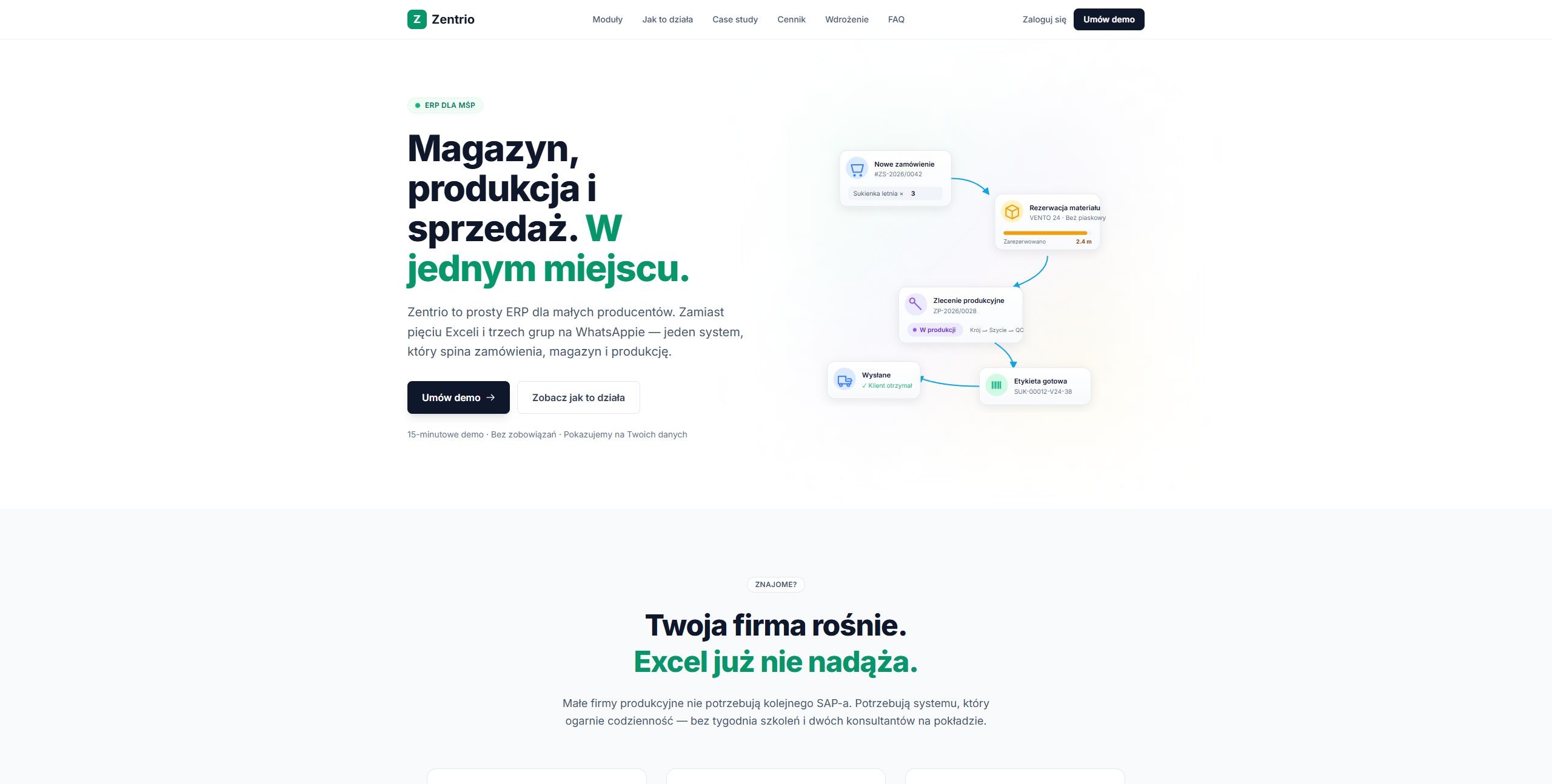
In-house tool, currently being tested at a clothing manufacturer.
ZENTRIO
Big tools for small shops
ZENTRIO started as an idea — and a handful of isolated features — back in 2020. At the time I was writing small, one-off scripts and integrations to bend one of the bigger systems to one company's very specific needs. That's where the idea came from: a system that wouldn't force a business to fit its processes, but would instead help adapt and tidy up the ones already working. The finished version was refined through the second half of 2025, tested in parallel at a real clothing manufacturer. There's still plenty ahead, and I won't pretend it's some breakthrough in business software — but I do want it to be a different kind of system, one that's friendlier to the person actually using it. Production and sales management for small and mid-sized businesses has a real problem: the tools built for this niche are either simply not enough, or they're corporate behemoths — too big and too complicated for smaller players, and in the end they often pile on more work than they take away.
Approach
ZENTRIO grew out of a simple premise: a small business deserves tools as good as the ones big companies have — but built for a place without a big company's backing. Over the years I've had the chance to work with plenty of firms across different trades, both sellers and makers. That gave me a perspective you won't find in a textbook.
Instead of copying ready-made templates and one-size-fits-all advice, I took apart the seemingly chaotic, improvised workarounds and rebuilt them into a system that could handle the kind of odd-but-real requirements that actually come up in practice.
Process
Before ZENTRIO, the company ran on Messenger — and it worked, just at a growing cost. An order came in through the company's public profile; the price got worked out from memory or on the spot, because the price list lived nowhere in particular and older products still carried prices from before the last cost change. Then someone had to check with production about a delivery date, since no one could see how much was in the queue or what stage things were at. The order got copied over to an internal group, measurements sometimes made it across and sometimes didn't, and an order's status existed only for as long as someone deleted the message once it was done. Deadlines slipped, parcels went out at the last minute, and shipping details were missing because nobody had asked the customer in time.
I didn't start by imposing a new order on anyone. I started by writing down what already worked in the chat and moving that logic into one place — so that nothing the company does well would get lost along the way. Every decision had to make the daily work simpler. We built wide, with too many features on purpose, and then cut back to what's actually needed.
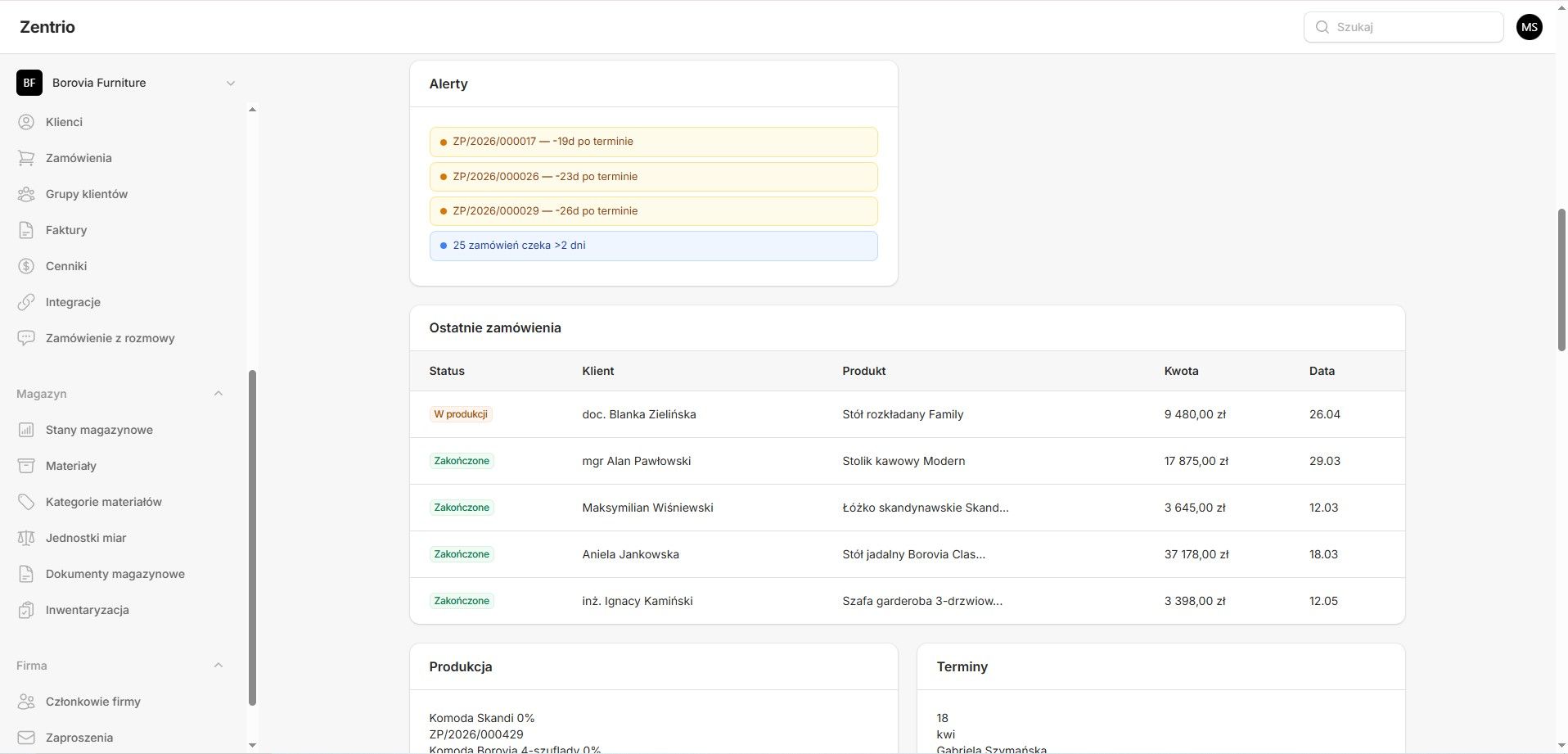
Handling a single order, which used to sprawl across eight steps spread over two Messenger threads and people's memory, now fits on one screen — and only three steps are left. An order's status stopped being a deleted chat message: it's permanent, and the whole team can see it.
Solutions
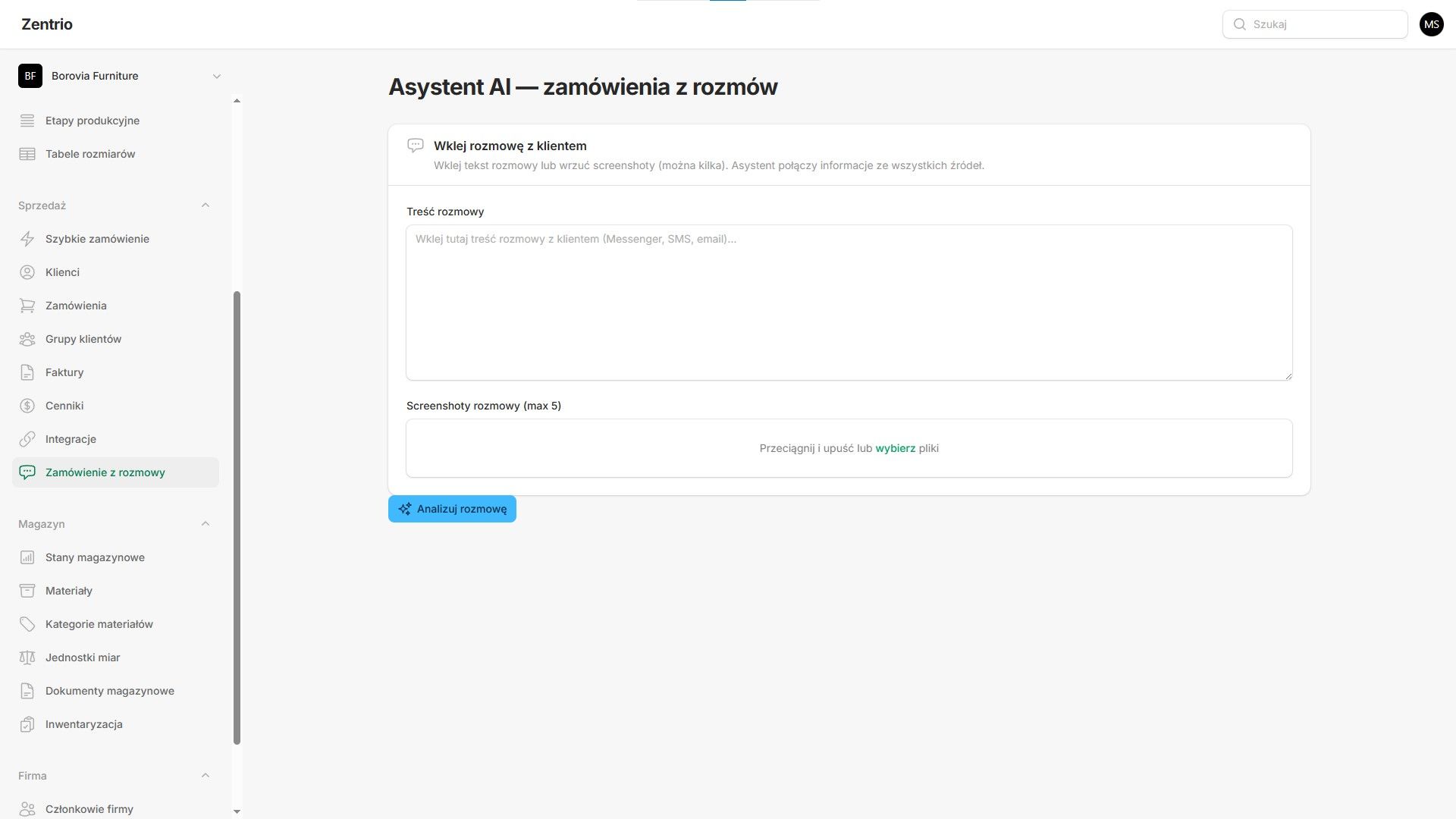
Some orders still come in as a plain message from the customer — written like a human, no form fields. Instead of retyping it into a form by hand, you paste the message in and the system reads it and pulls out the order: product, quantity, measurements, terms — and drops it in for you to check. A person confirms; nobody keys it from scratch. Integration with Meta and WhatsApp is planned.
The cost of a finished product isn't typed in by hand — it's calculated from the bill of materials (BOM). When a component's cost changes, the product's cost follows. That's how products stop slipping through with a price nobody remembered to update — say, after the materials went up.
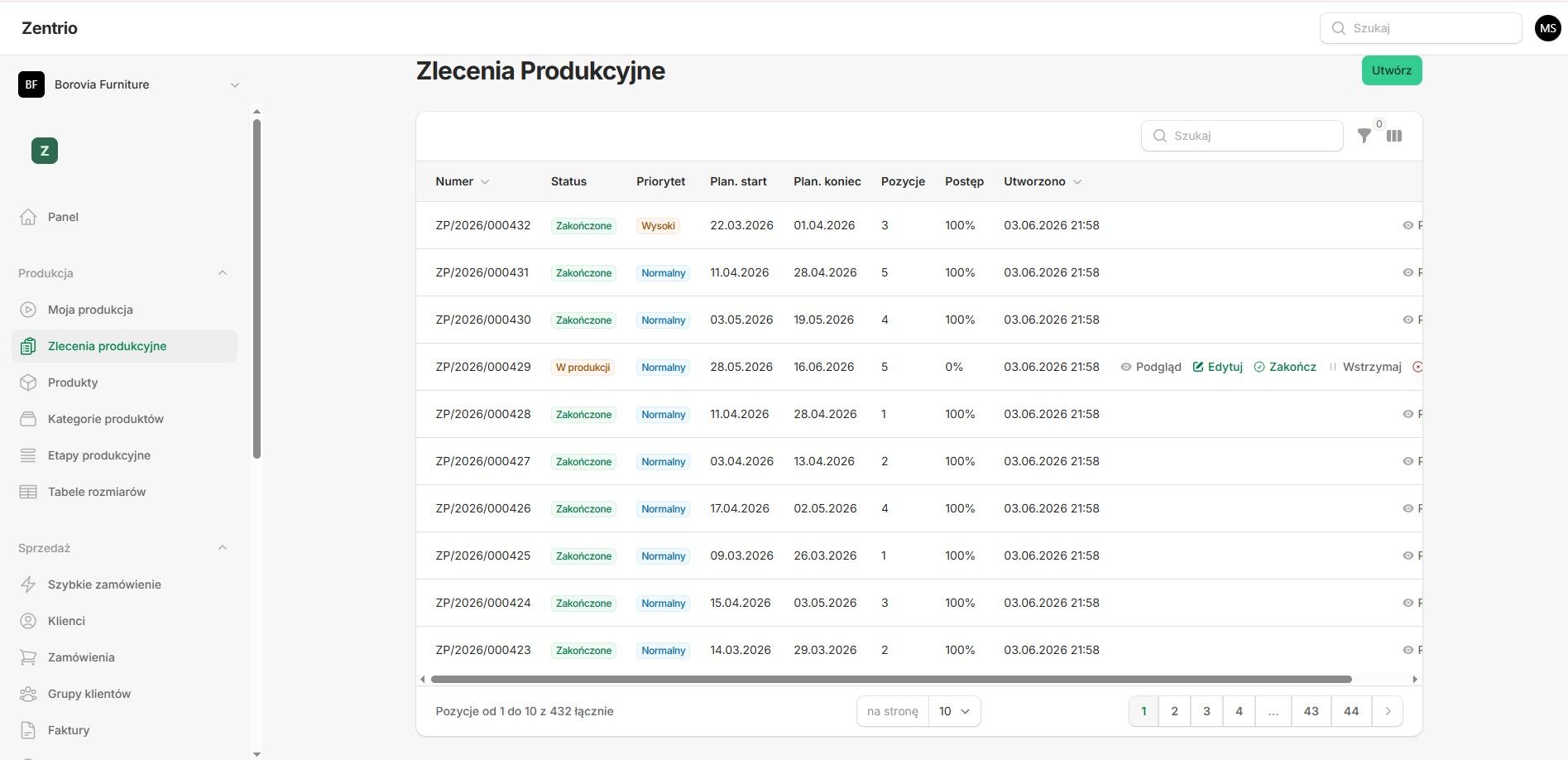
Production has its own panel — 'My production' — where jobs are broken down into stages and the time of each stage is measured. You can see what's in the queue and where it stands, without asking on the group. And those measured times are the genuinely useful business layer: realistic deadlines and real production costs both come straight out of them.
Each product category has its own set of fields. On a given product you only see what actually applies to it — no scrolling past empty boxes meant for a completely different line of goods.
Fewer unnecessary steps, and the repetitive work automated.
Final shape
- One tool instead of chat threads and people's memory
- Measurements and shipping details kept with the order
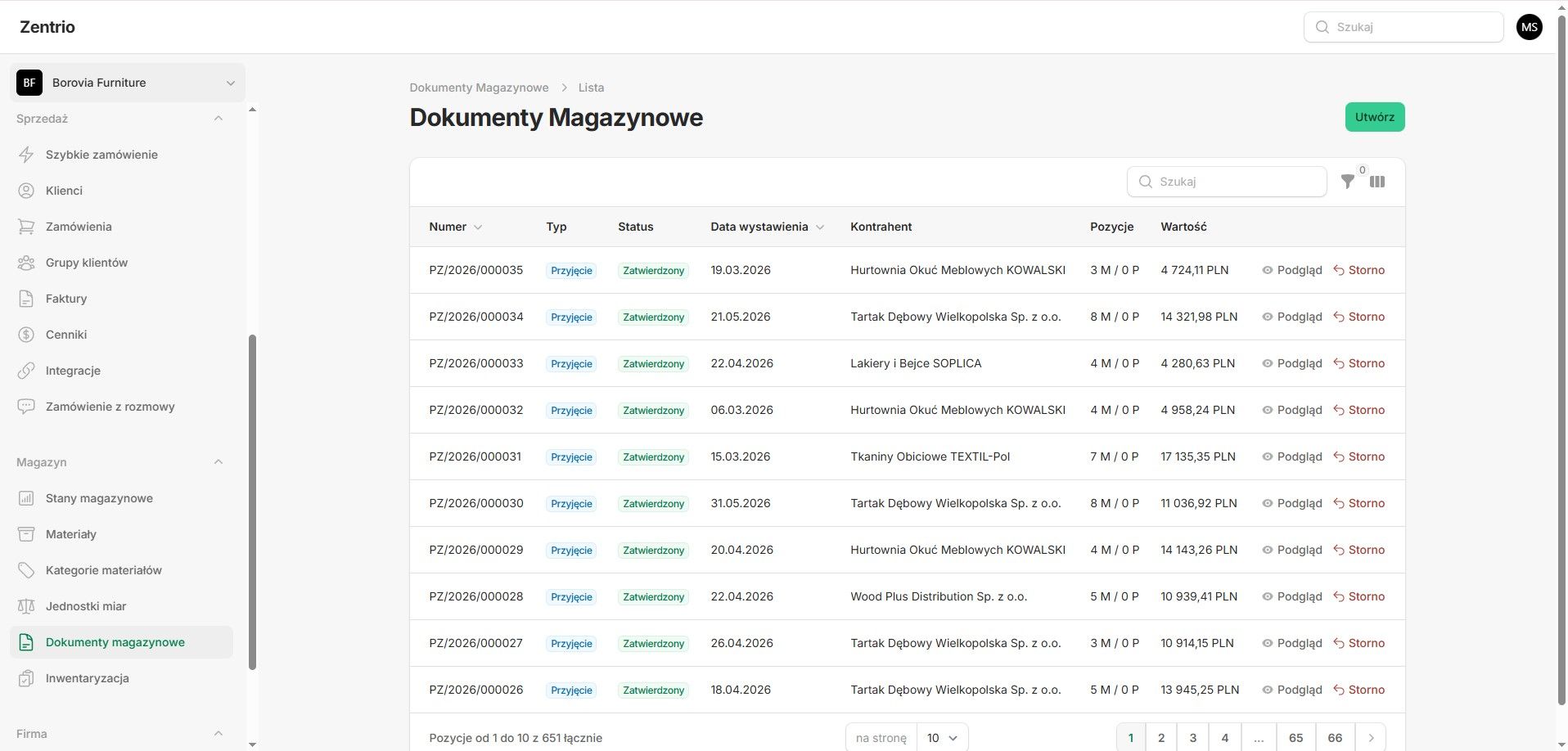
- Inventory that tracks both materials and finished goods, tied into production
- Two-way sync with the online shop
The result is a platform that supports the work instead of piling onto it.
Feedback
None yet — I'll add them after the first months of real-world use, once we wrap up the rollout.
Product Images
- Steps to process an order
- 8 → 3
- Tests, all passing
- 380